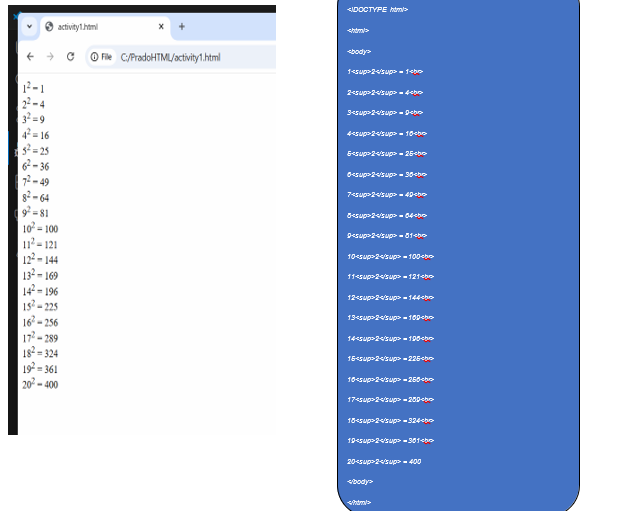
Print the squares of the numbers 1 – 20. Each number should be on a separate line, next to it the number 2 superscripted, an equal sign and the result. (Example: 102 = 100)
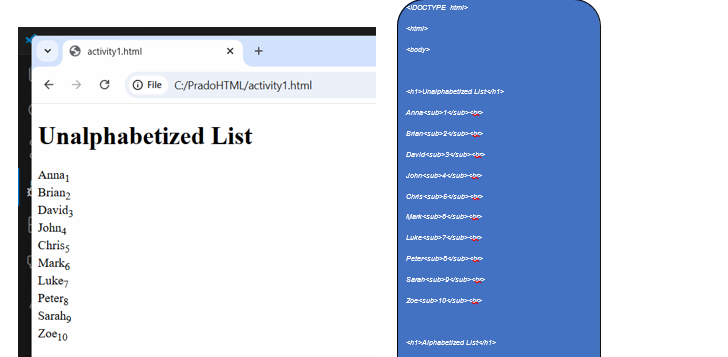
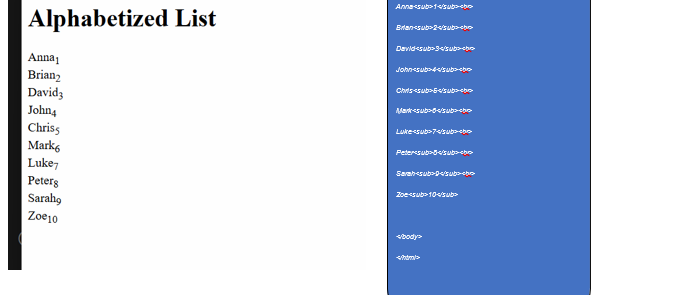
Prints 10 names with a line break between each name. The list should be alphabetized, and to do this place a subscripted number next to each name based on where it will go in the alphabetized list. (Example: Alan1). Print first, the unalphabetized list with a subscript number next to each name, then the alphabetized list. Both lists should have an <h1> level heading.
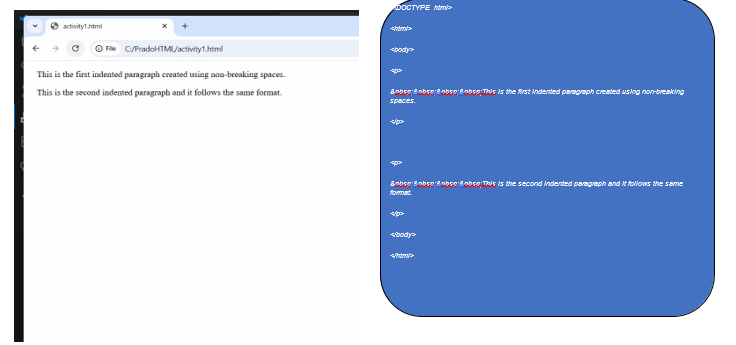
Print two paragraphs that are both indented using the command.
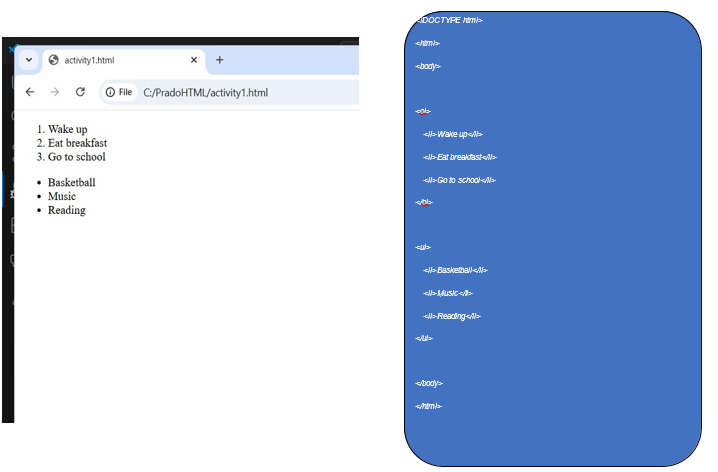
Print two lists with any information you want. One list should be an ordered list, the other list should be an unordered list.
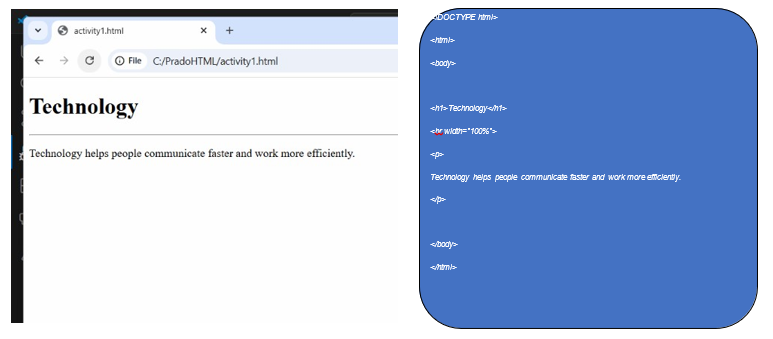
Prints an h1 level heading followed by a horizontal line whose width is 100%. Below the horizontal line print a paragraph relating to the text in the heading.
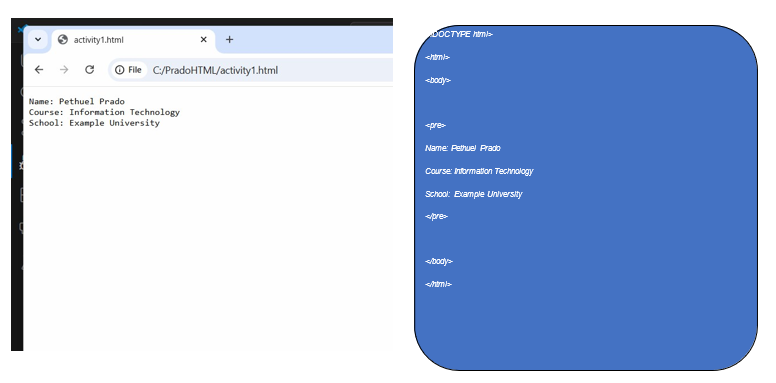
Print some preformatted text of your choosing. (hint: use the <pre> tag)
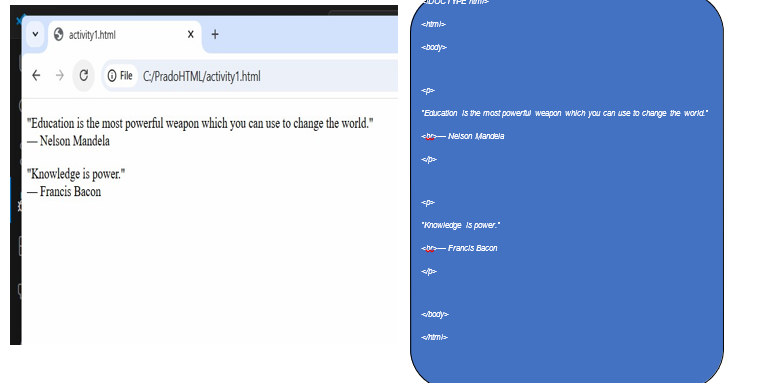
Print a long quote and a short quote. Cite the author of each quote.
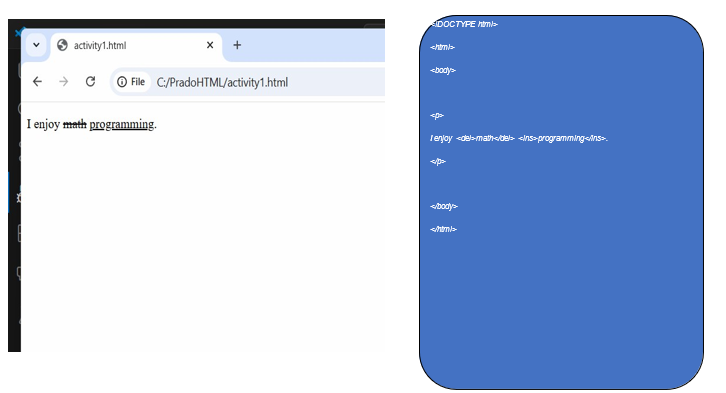
Print some deleted and inserted text of your choosing.
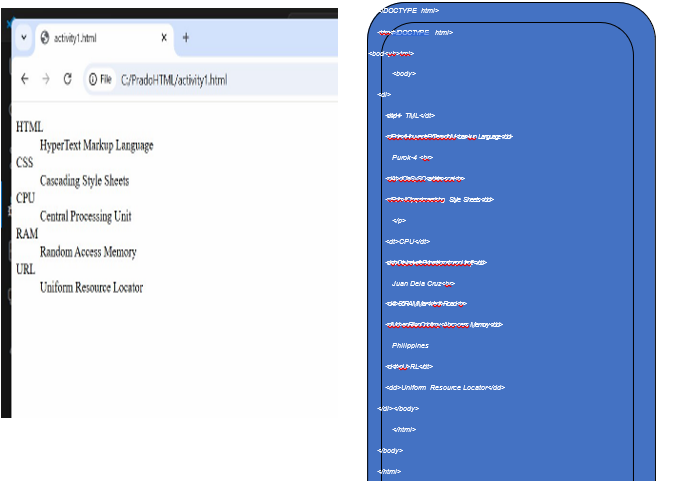
Print a definition list with 5 items.
Print two addresses in the same format used on the front of envelopes (senders address in top left corner, receivers address in the center).
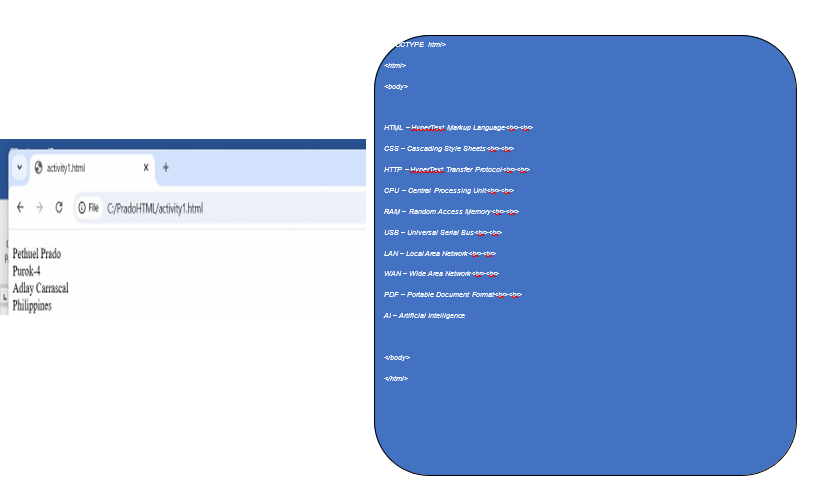
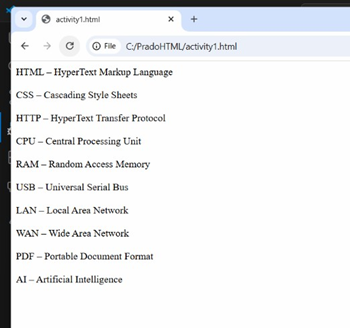
Print ten acronyms and abbreviations of your choosing, each separated by two lines. Specify the data that the abbreviations and acronyms represent.